
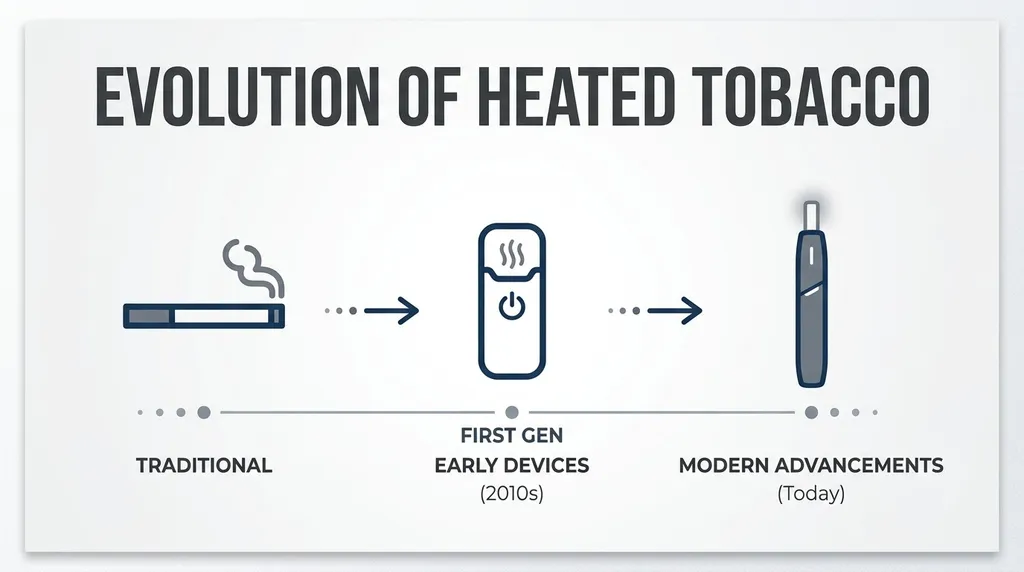
Tobacco technology has changed more in the last decade than in the previous hundred years. Ashtrays, lighters, and smoke-filled rooms are slowly giving way to sleek devices that heat instead of burn. If you've ever wondered how this shift happened, or what's actually going on inside these gadgets, this guide breaks it down in plain language.
Where It All Started: The Problem With Burning
For over a century, tobacco use meant one thing: combustion. You light a cigarette, it burns at temperatures above 600°C, and that burning process creates smoke, ash, and thousands of chemical byproducts. Manufacturers and scientists spent decades trying to find a way to deliver tobacco flavor and nicotine without setting anything on fire.
Early attempts date back to the 1980s, but the technology of the time was clunky, unreliable, and never caught on with the public. It wasn't until the 2010s that heat-not-burn systems became genuinely usable, thanks to better batteries, precise temperature control, and smaller electronics.
What "Heat-Not-Burn" Actually Means
The name explains the concept pretty well. Instead of igniting tobacco, these devices heat a specially designed tobacco stick to a controlled temperature, usually somewhere between 240°C and 350°C, depending on the device generation. This is hot enough to release flavor and vapor from the tobacco but well below the combustion point.
Because there's no fire, there's no ash and no traditional smoke. Instead, users get an aerosol, sometimes called vapor, that carries flavor and nicotine. This is a fundamentally different mechanism than a traditional cigarette, which relies entirely on burning tobacco leaves to generate smoke.
This distinction matters a lot for people trying to understand modern nicotine products. A regular cigarette and a device usingterea cigarette sticks work on completely different principles, even though both ultimately deliver tobacco flavor and nicotine to the user. One relies on fire; the other relies on precise, controlled heat.
The First Generation: Blade Heating
The earliest commercially successful heat-not-burn devices used a small heating blade. This blade was inserted directly into the tobacco stick and warmed it from the inside out. It worked, but it had drawbacks.
The blade needed regular cleaning, since tobacco residue would build up over time. It could also wear down or bend with heavy use, which sometimes led to uneven heating or reduced performance. Users had to be careful when inserting sticks, since a damaged blade could affect the whole device.
Despite these limitations, blade heating proved that heat-not-burn technology could work at scale. It paved the way for something better.
The Second Generation: Induction Heating
This is where things got genuinely clever. Instead of a physical blade touching the tobacco, newer devices use induction heating. A small metal element is built directly into the tobacco stick itself. When the stick is inserted into the device, an induction coil generates a magnetic field that heats this metal element from the outside, without any direct contact.
This is often called "SmartCore Induction" or "blade-free" technology, depending on the brand. The heating source moves from the device into the consumable itself, which changes everything about how the system performs.
Here's why this matters:
- No blade means no cleaning hassle. Since there's nothing to insert and remove repeatedly, there's far less residue buildup inside the device.
- More even heating. Induction technology heats the tobacco more uniformly, which many users say improves flavor consistency from the first puff to the last.
- Better durability. Without a fragile blade, the device is less prone to mechanical damage from daily use.
- Faster startup times. Newer induction-based devices typically heat up in under 20 seconds, compared to older systems that could take closer to a minute.
Induction heating represents a genuine engineering leap, not just a marketing refresh. It solved real problems that frustrated users of first-generation devices.
Why Precision Temperature Control Matters
One detail people often overlook is just how precise these devices have become. Modern heating systems use microprocessors to monitor and adjust temperature dozens of times per second. This level of control affects flavor, vapor production, and consistency between uses.
Older combustion-based smoking has no such control. A cigarette burns however it burns, influenced by paper density, airflow, and how fast someone puffs. Heat-not-burn devices remove most of that variability, which is part of why manufacturers market them as a more "consistent" experience.
The Rise of Heated Tobacco in the Middle East
Heated tobacco products have found a particularly enthusiastic audience across the Gulf region. Dubai, in particular, has become something of a hub for these devices, driven by a mix of factors: a large expat population already familiar with the technology from Europe and Asia, strict regulations around traditional smoking in public spaces, and a market that tends to embrace new consumer electronics quickly.
Retail availability has expanded significantly in recent years, with dedicated stores and online platforms making it easier for residents and visitors to access devices and tobacco sticks. Anyone researching current options forTerea Dubai will notice a wide range of flavor variants and device generations now available locally, reflecting just how mainstream this category has become in the region.
This regional growth mirrors a broader global pattern. Wherever heat-not-burn technology has launched, adoption tends to follow a similar curve: slow initial interest, followed by rapid growth once devices become more reliable and widely available.
Current User Trends Worth Knowing
A few patterns have emerged as this technology has matured:
- Users increasingly expect longer battery life. Early devices often needed charging after just a handful of uses. Current generations last considerably longer between charges.
- Flavor variety has exploded. What started as a handful of tobacco-only options has grown into dozens of flavor profiles, catering to a much wider range of preferences.
- Compact design is now a priority. Manufacturers have shrunk devices significantly while improving performance, responding to demand for something that fits easily in a pocket or bag.
- Environmental considerations are gaining attention. Because there's no ash and no burning, some users view these systems as producing less visible waste, though the consumable sticks and device components still require proper disposal.
What's Next for Heating Technology
Engineering in this space hasn't slowed down. Companies continue to refine induction systems, experiment with new heating curves, and explore ways to extend battery life further. Some newer devices already support extended sessions without needing to be recharged between uses, a significant improvement over early models.
It's also worth noting that regulatory frameworks around heated tobacco continue to evolve differently across countries. Some regions have embraced these products as an alternative category distinct from traditional cigarettes, while others apply similar restrictions to both. Anyone considering these devices should stay informed about local regulations, since rules can vary significantly by country and even by city.
Final Thoughts
The shift from blade heating to induction technology represents one of the more interesting engineering stories in recent consumer tech. It's a reminder that even established habits and products can be reimagined through better design, smarter materials, and more precise electronics.
Whether this technology continues to grow or eventually gets replaced by something else entirely, it's already changed how millions of people think about tobacco consumption. Understanding how it actually works, rather than just seeing it as another gadget, gives a clearer picture of why it's captured so much attention in such a short time.